Athens, Greece
Where Myths Come Alive and Fun Shouts “Opa!”
Hello, or as they say in Greece, Yiá sas! (YAH-sahs)
Athens is a must-see in your lifetime, and below is your list of top Things to Do in Athens, Greece! It’s a city like no other. There aren’t many places you can visit that are 7,000 years old! With its long and complicated history leaving relics everywhere, there’s an outdoor museum around every turn.
As the capital of Greece, one out of every three Greeks (the people from Greece) lives here.
It’s super easy to get around, and there is SO much to see and do within a small area!
We highly recommend spending at least two full days here before heading to the islands. Stay downtown so you can walk everywhere.
Family Insider Tips
KeeKee Corner
What to See & Do
Acropolis
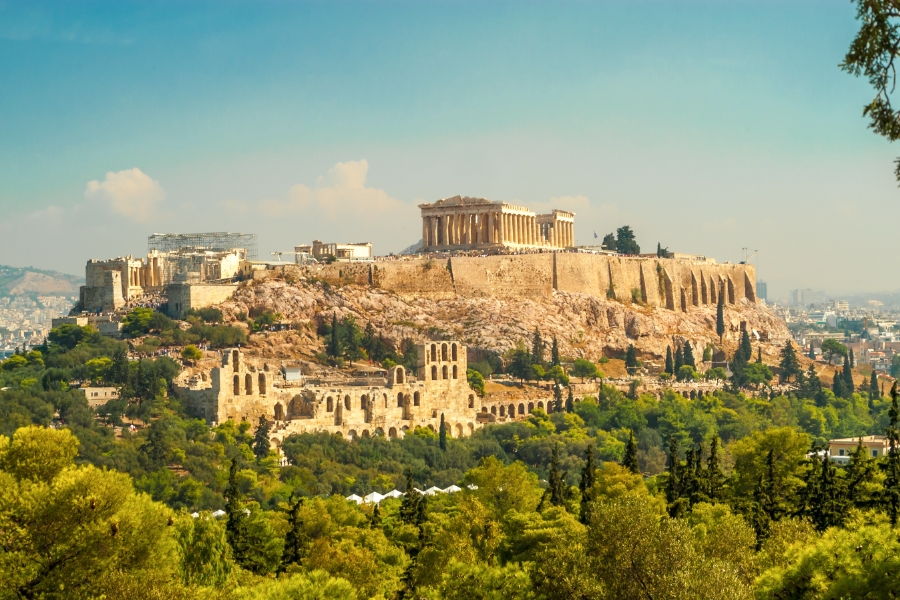
High on the hill in the middle of the city stands the glorious heart of Athens, the Acropolis, dating back to the 5th century BC. Acropolis means ‘high city.’
There was a time when people lived atop the Acropolis, but in 510 BC, it was ruled that the area be dedicated to the Greek gods.
In 480 BC, the Persians captured and destroyed all the structures on the Acropolis, leaving it in ruins.
In the mid-5th century, the statesman Perikles persuaded the Athenians to rebuild the temples on the Acropolis on a grand scale. During the second half of the 5th century B.C., construction took place for the most famous buildings on the Acropolis, including The Parthenon and the Temple of Athena Nike.
You can also visit the beautiful Acropolis Museum to see over 4,000 artifacts.
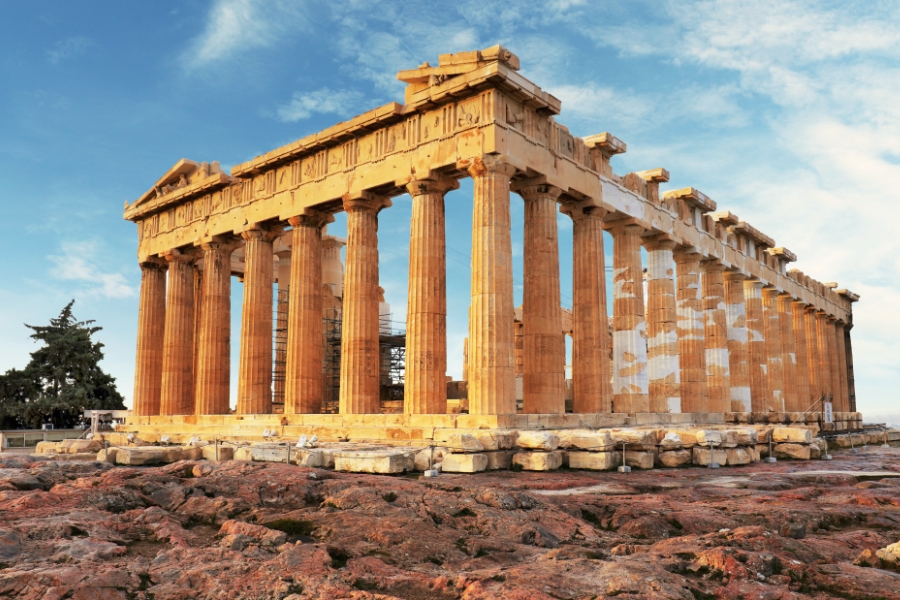
Parthenon
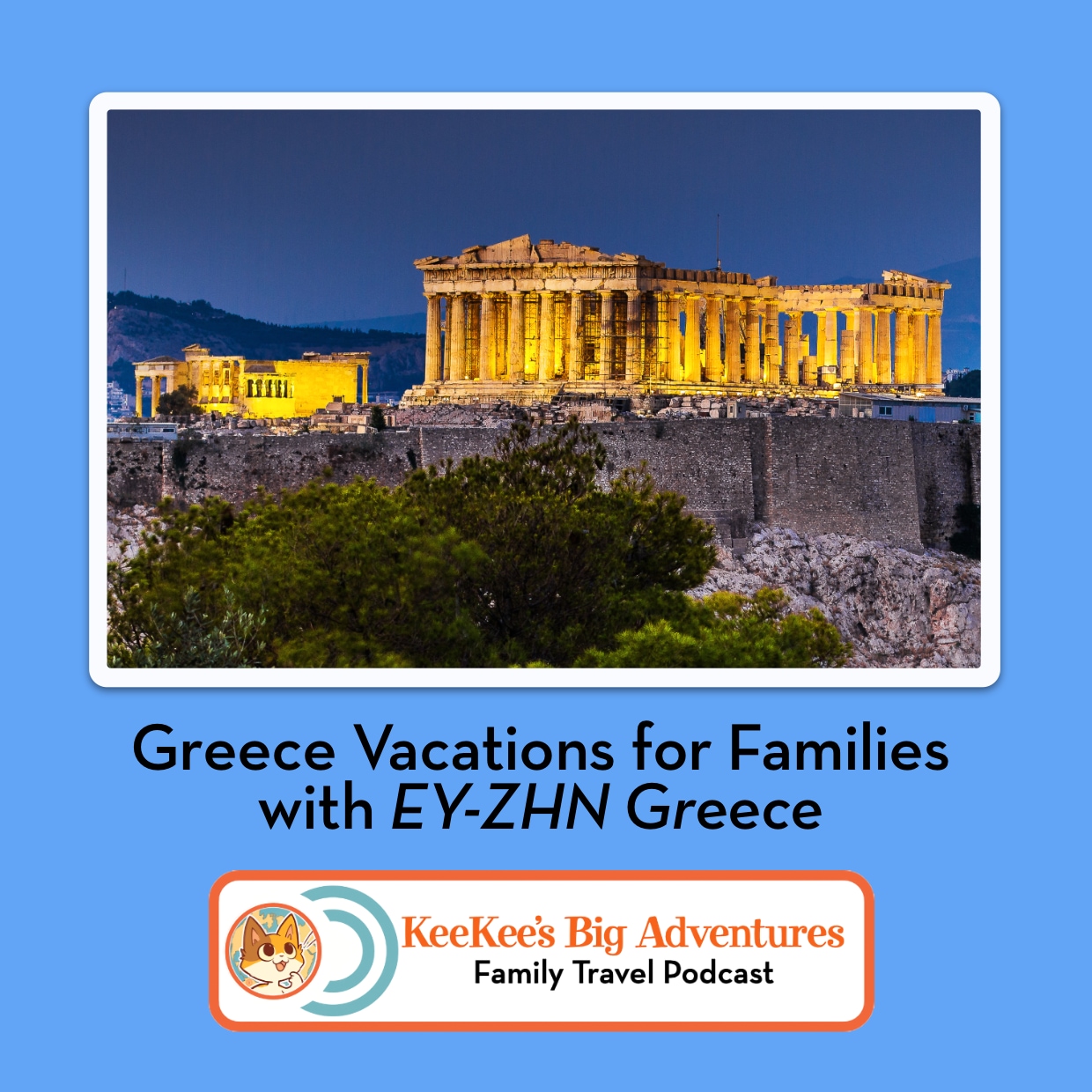
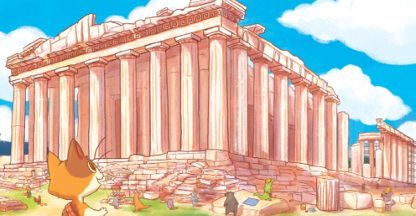
Crowing the Acropolis and visible all over town, The Parthenon is a 2,500-year-old ancient temple.
The Parthenon is one of the most famous buildings in Greece and the world. It was initially a temple dedicated to the Greek goddess Athena, and the city of Athens is named after her!
It is the largest Doric temple in Greece (100 feet x 228 feet) and took nine years to build.
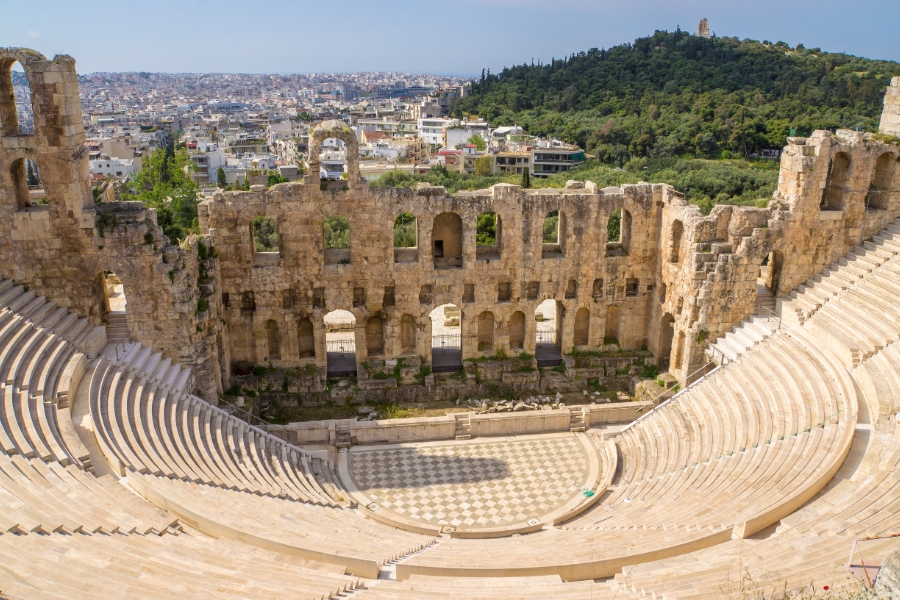
Greek Odeon (Theaters)
The world’s first theater and plays began in Athens!
The Acropolis has two theaters, or “odeon.”
The Theatre of Dionysus, dating back to the sixth century BC, was considered to be the world’s first theater. It was dedicated to Dionysus, the god of plays and wine. Tragedies and comedies by playwrights like Sophocles were performed here. The theater could seat 17,000 people.
The Odeon of Herodes Atticus was built in 161 AD. Performances, such as the Athens Festival in the summer, are still held here today.
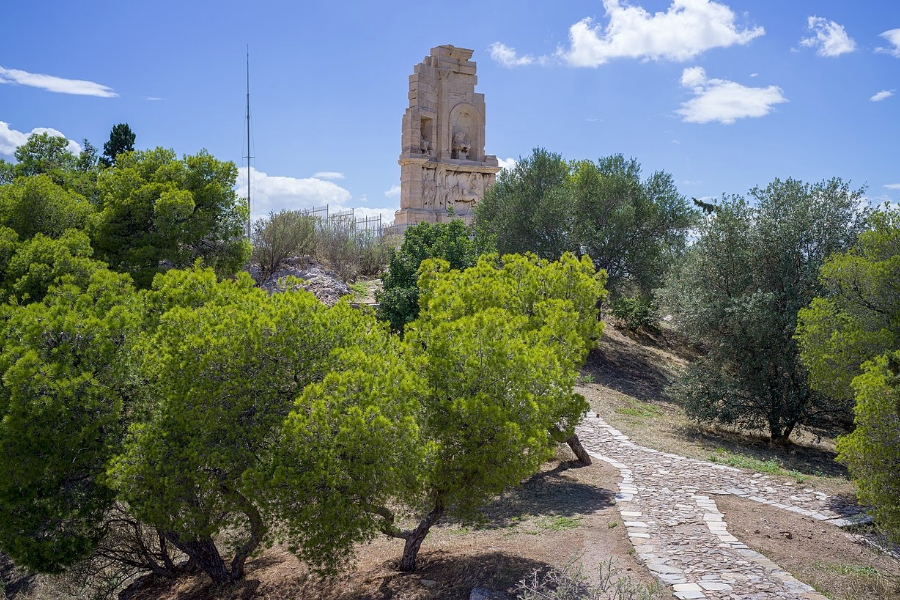
Philopappou Hill
Take the leisurely stroll to the top of Philopappou Hill, known as “the hill of muses,” for amazing views of the Parthenon and 306-degree views across Athens, including all of southern Athens, down to the sea.
The hill is named after Roman senator Gaius Julius Antiochus Philopappos, who retired in Athens and died here in about 114 AD. There’s a Philopappu Monument marble tomb and a monument to him at the top.
You can also see the cave that is believed to be where Socrates was imprisoned and condemned to death. Yes, kinda grim, but it is history!
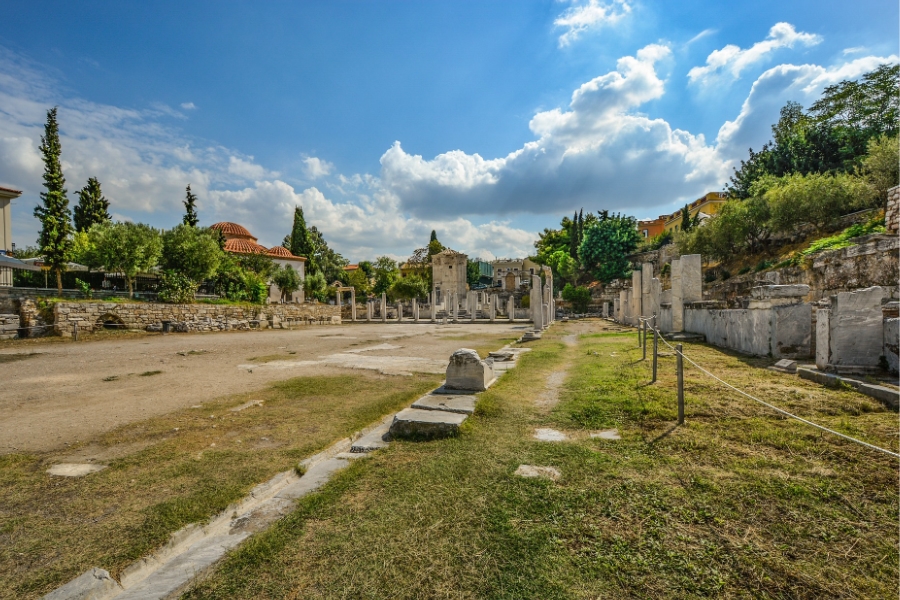
The Agora
At the base of the Acropolis sits the Ancient Agora. Agora means “gathering place.”
The Agora was once the ancient heart of Athens and the center of public life for ancient Athenians: political, social, and commercial.
Greeks invented Democracy here, and Socrates preached here!
As you walk among the stones and look up at the Parthenon, you can imagine the activity that used to take place.
Highlights:
Temple of Hephaestus – Constructed in 449 BC, it’s the best-preserved Classical temple in Greece and the only temple in the ancient Greek world with a completely intact roof.
Stoa of Attalos – A stoa (stoh-AH) is a covered walkway. The Stoa of Attalos was the world’s first shopping mall. It has 45 Doric columns on the ground floor and today houses a museum with all the finds from the Agora.
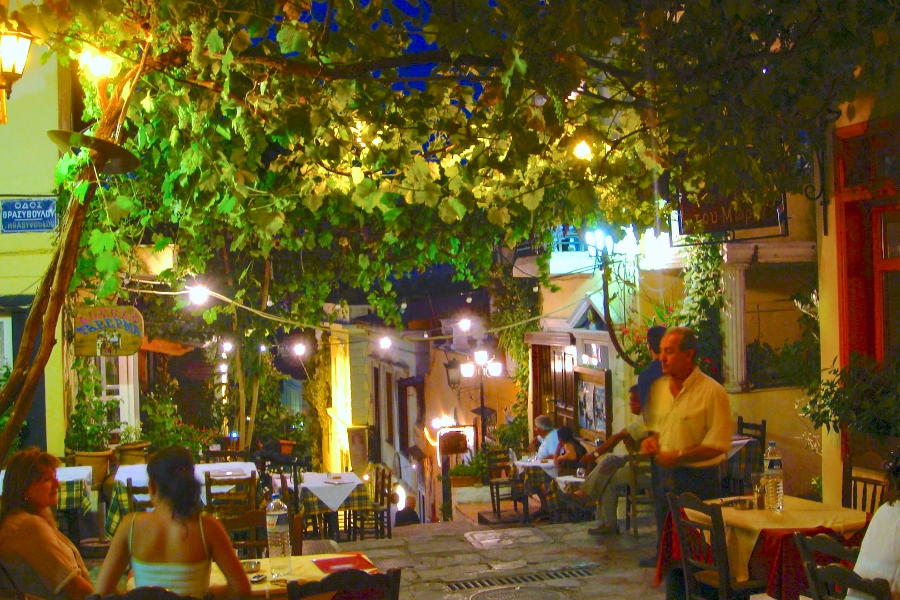
Plaka
Outside the Agora, partially built into the Acropolis rocks, is Plaka, the old quarter of Athens and once considered the neighborhood of the Olympic gods.
We LOVE strolling through this area. You can feel the history.
Its narrow, winding streets are full of houses, ancient monuments, shops, and tavernas.
There are many restaurants, cafes for Greek coffee or drinks, and shops, including the Monastiraki Square/Flea Market.
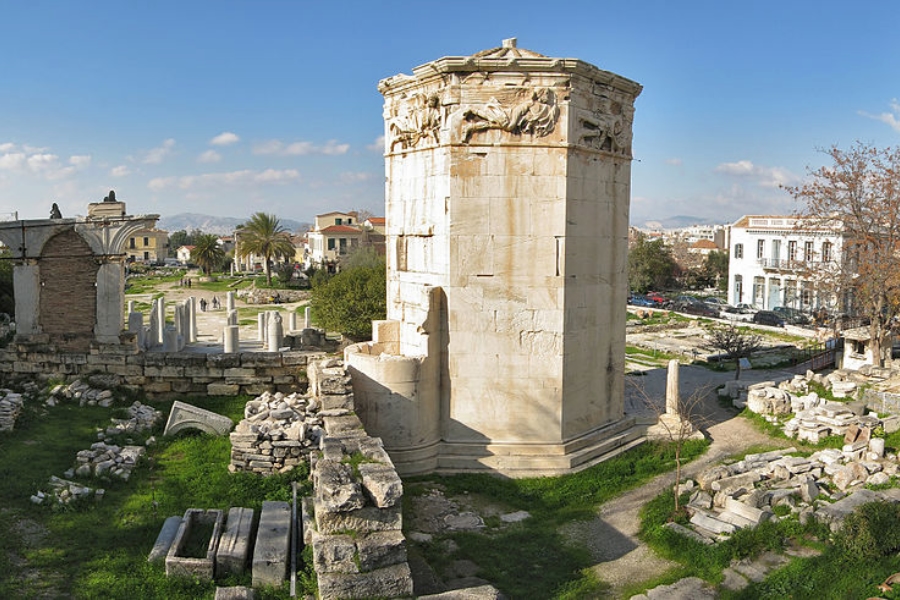
Tower of the Winds
Built during Julius Caesar’s reign in the first century AD, the Romans moved Athens’ marketplace from the older Agora to this location.
Tower of the Winds is the highlight. An astronomer designed the octagonal structure in the first century BC. It is considered the world’s first meteorological station and features a combination of sundials, a water clock, and a wind vane.
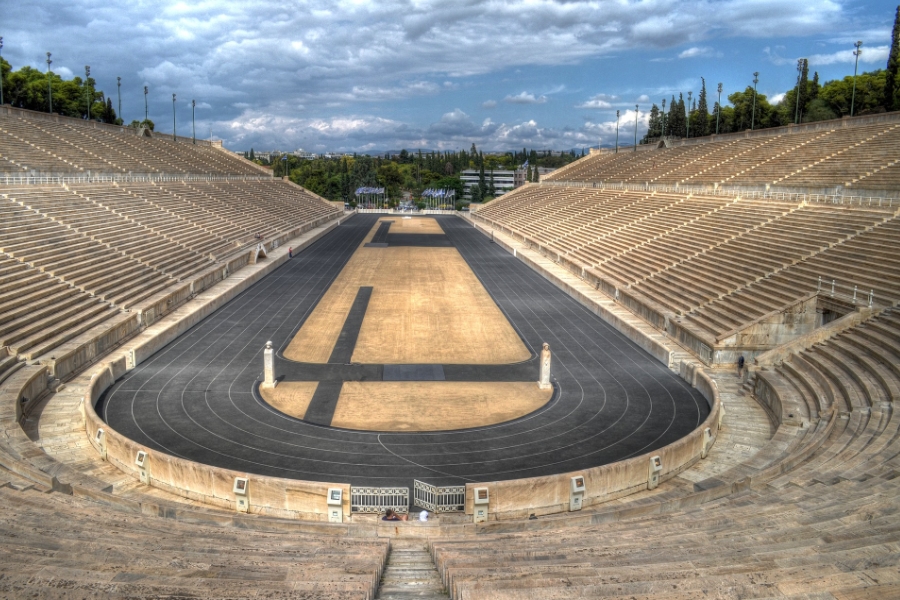
Panathenaic Stadium
Built in 329 BC (or 556 AD) for the athletic competitions of Panathenaia (the major festival honoring patron goddess Athena), it was home to The Opening Ceremony for the first modern Olympic Games in 1896.
Also known as Kallimarmaro, which means “beautifully marbled,” it is the only major stadium in the world built entirely of white marble.
The Panathenaic Stadium is where the Olympic flame handover ceremony occurs before every Olympic Games.
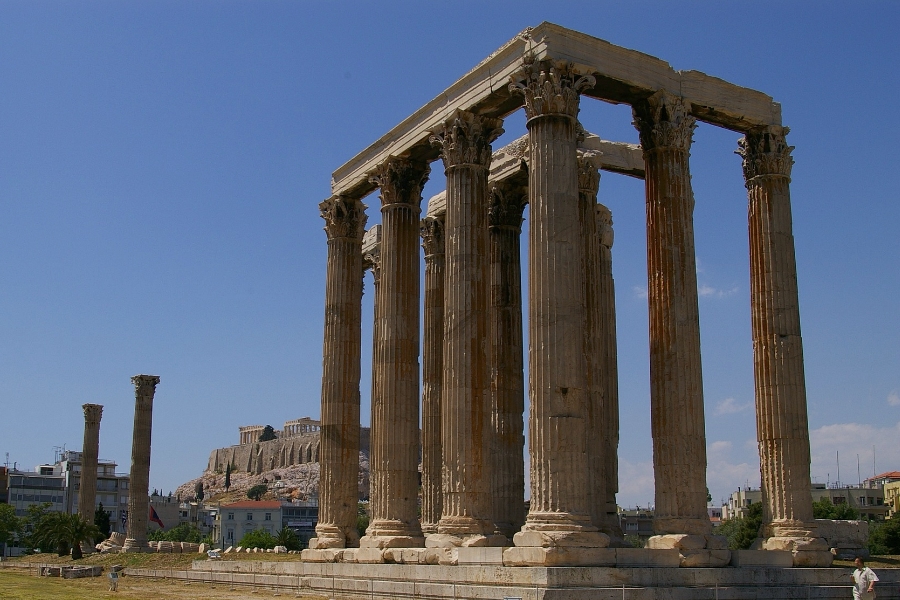
Temple of Olympian Zeus
At one time, it was the largest temple in all of Greece, and only 16 of the original 104 columns remain.
Just the size of the 16 columns you see is overwhelming. It is hard to imagine 104 of them!
Started in the 6th century BC, it took 700 years to finish in 132 AD!
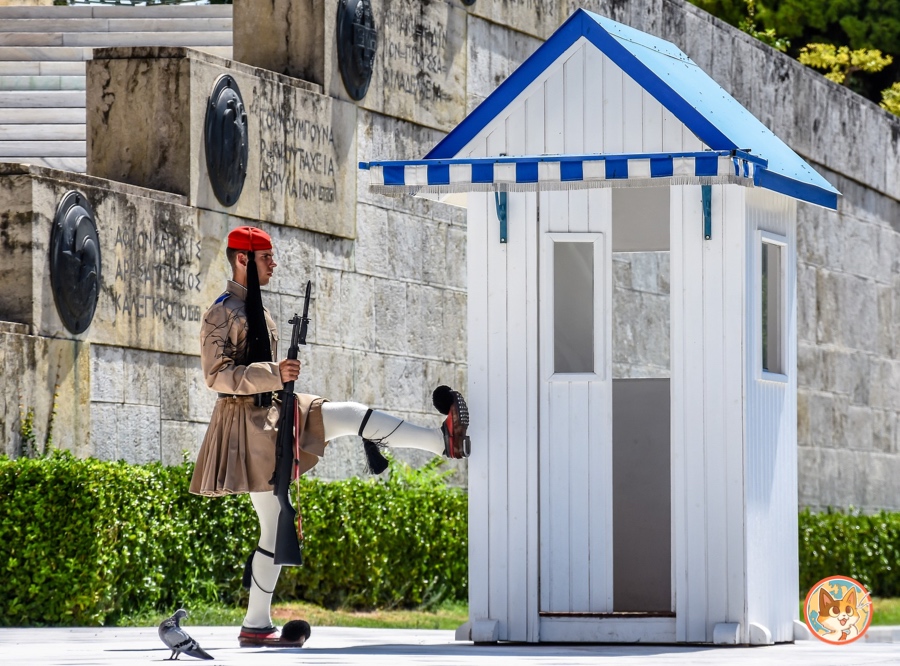
Syntagma Square
Known as Constitution Square, this is a must-visit destination in the city center to see the Changing of the Evzones, a special infantry unit of the Greek Army that takes place every hour and guards the Tomb of the Unknown Warrior.
The Evzones are famous for their skirts (400 pleats symbolizing each year of the Turkish/Ottoman occupation), pompom shoes, and elaborate changing of the guard.
The guards change hourly all week. The full Changing of the Guard Ceremony with a band is at 11am on Sundays.